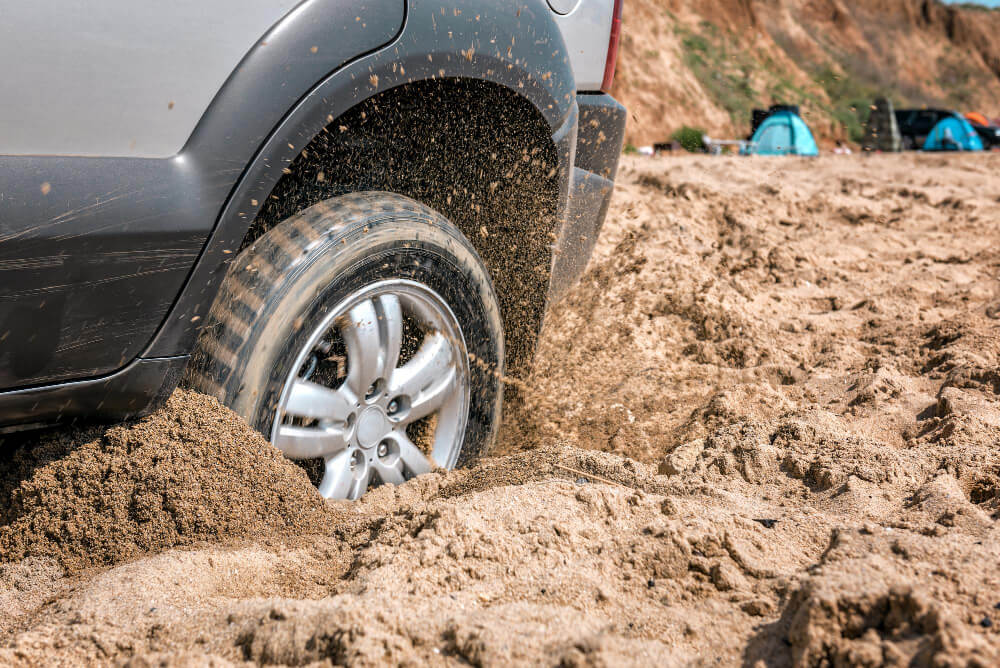
Getting stuck off-road catches even experienced drivers off guard. Sand pulls tires down without much warning, mud can swallow a vehicle faster than expected, and soft terrain has a way of humbling even the most capable 4×4 setups. It happens. That is not the real problem.
The real problem is what happens in the 60 seconds after. Most of the damage, both to the vehicle and to the situation itself, comes from reacting on instinct rather than pausing to think it through. This article covers the most serious mistakes to avoid when stuck off-road, explains why certain instincts make things worse, and outlines what actually works instead. If you are in the Virginia Beach area and need professional off-road recovery, Green Light Towing Service is available 24 hours a day, seven days a week at 757-938-3378. Calling us early, before things escalate, is almost always the right move.
Why the First Few Minutes Matter Most
When a vehicle loses traction off-road, the window to recover cleanly is surprisingly short. Every action taken in those first few minutes either keeps your options open or narrows them quickly. Understanding why certain instincts backfire is the first and most useful step toward handling the situation the right way.
Common Mistakes to Avoid When Stuck Off-Road
Hitting the Gas and Hoping for the Best
This is the most predictable response and usually the most damaging one. Flooring the accelerator feels like the obvious fix, but on soft terrain like sand or mud, spinning tires do not find grip. They dig. The harder the wheels spin, the deeper the vehicle sinks, and a surface-level stuck can become a fully buried situation in a matter of seconds.
The physics are straightforward. Spinning tires displace material rather than gripping it. On sand, that creates a hole. On mud, that creates a rut. Either way, the vehicle drops lower with every attempt.
The correct first response is to stop immediately. Take your foot off the accelerator, assess where the tires are sitting, and do not apply power again until you have a clearer plan.
Skipping the Assessment and Jumping Straight Into Action
Stopping is step one. Step two is actually looking at what you are dealing with before doing anything else. Most drivers skip this part and jump straight into action, which often wastes effort and sometimes makes the situation worse.
Before trying anything, step out carefully, confirm the area is safe, and take a proper look at the situation. A few useful questions to ask:
- How deep are the tires sitting into the surface?
- Which direction offers the clearest exit path?
- Is the ground firmer behind you or ahead of you?
Reversing out the way you came in is almost always easier than pushing forward through the obstacle. Taking 60 seconds to assess before acting can save a significant amount of time and stress.
Attaching a Strap to the Wrong Recovery Points
This is where things shift from frustrating to genuinely dangerous. When a driver is stressed and in a hurry, it is easy to attach a recovery strap to whatever looks solid, including trailer hitches, bumper brackets, or frame sections that were never designed to handle recovery loads.
A proper recovery point is a reinforced anchor specifically rated for the forces involved in vehicle extraction. When an underrated attachment point fails under tension, the stored energy in the strap releases suddenly. Snapback from a failed recovery strap is a well-documented cause of serious injuries, and it can happen fast.
Before any recovery attempt involving another vehicle or a winch, confirm that both attachment points are properly rated. If there is any doubt, that is a reasonable moment to stop and call a professional rather than risk damaging the vehicle or getting someone hurt.
Assuming 4WD or AWD Will Always Get You Out
Four-wheel drive and all-wheel drive are excellent tools for navigating challenging terrain. They are not guaranteed exits once a vehicle is already stuck. Once all four wheels are spinning without meaningful traction, the drivetrain has very little additional leverage to offer.
This distinction matters because it shapes how drivers approach off-road terrain in the first place. Four-wheel drive helps prevent getting stuck in many situations. It does not always reverse one once it has happened. Knowing that ahead of time prevents drivers from over-committing to terrain they cannot safely handle.
Trying to Self-Recover Without the Right Equipment
Self-recovery is absolutely possible in many stuck situations. The issue is attempting it with whatever happens to be in the trunk. A standard tow rope is not designed for the shock loading involved in pulling a stuck vehicle free. A nearby tree is not automatically a safe or stable winch anchor. Improvised recoveries are a common source of secondary vehicle damage and preventable injuries.
A basic, practical self-recovery kit typically includes:
- A rated kinetic recovery strap, not a standard tow rope
- Traction boards or recovery tracks
- A hi-lift jack for repositioning the vehicle
- A rated anchor point or tree saver strap if using a winch
Packing the right gear before heading out is far more effective than problem-solving after getting stuck. And being honest about the limits of a situation, including knowing when to stop trying, is just as important as having the right technique.
What to Do When Your Vehicle Gets Stuck Off-Road
Here is a clear sequence to follow when it happens:
- Stop immediately and remove your foot from the accelerator.
- Check that your surroundings are safe before stepping out of the vehicle.
- Assess the situation: check tire depth, ground conditions, and the best exit direction.
- Identify rated recovery points on both vehicles before attaching anything.
- Use proper recovery equipment if attempting to self-recover.
- If the vehicle is deeply stuck, the terrain is unsafe, or self-recovery is not working after a reasonable attempt, contact a professional off-road recovery service.
Early calls for help consistently result in less vehicle damage and faster resolution. There is no benefit to waiting until the situation has gotten significantly worse.
The Bottom Line
Getting stuck off-road is not a failure. It happens to prepared drivers and experienced ones alike. What makes the difference is the decisions made afterward. Avoiding the most common mistakes, stopping before digging in deeper, assessing before acting, using the right equipment, and recognizing the limits of self-recovery, can turn a stressful situation into a manageable one.
If your vehicle is stuck beyond what self-recovery can handle and you are in the Virginia Beach area, Green Light Towing Service offers 24/7 off-road recovery assistance. You can reach us at 757-938-3378. The sooner you call, the more options we have to help you get out safely and with minimal damage to your vehicle.