
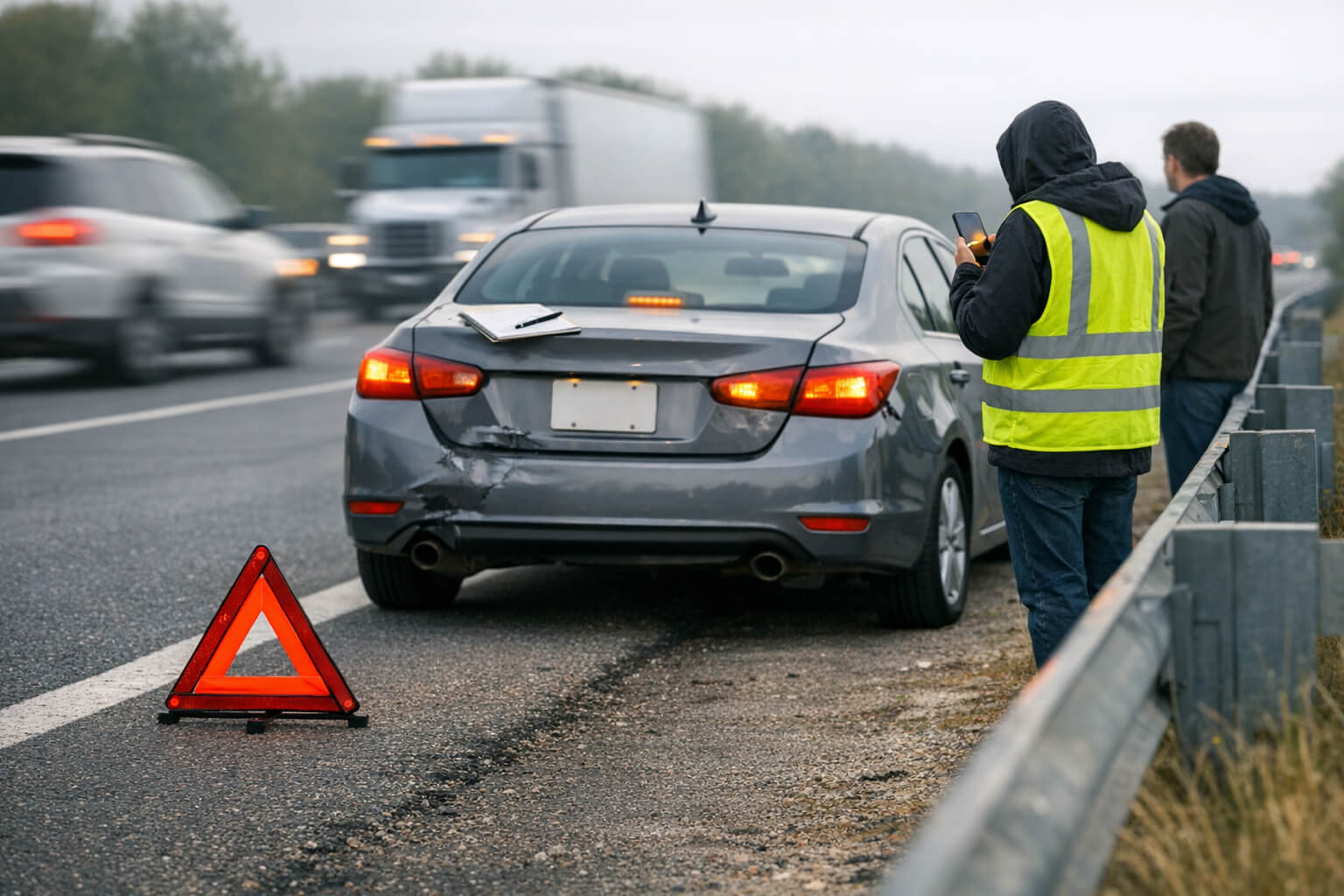
If you’ve just been in a crash on a busy road, the biggest danger often comes after the impact: fast-moving traffic, limited visibility, and distracted drivers. Your priorities are to prevent a second collision, get everyone to a safer spot, and call for the right help. If your vehicle is disabled or you’re stuck in a dangerous position, Green Light Towing Service can help coordinate accident recovery and towing, and you can reach them at 757-938-3378 while you work through the steps below.
First minute: protect people before property
Start by checking yourself and your passengers for injuries and signs of shock. Even if everyone insists they’re “fine,” take a breath and look for immediate hazards such as smoke, a strong fuel smell, hissing from the engine bay, or airbags that deployed hard enough to cause pain.
If you’re in a travel lane or close to moving traffic, your next decision is simple: get out of the path of vehicles as soon as it’s safe to do so. If the car can be moved, moving it to the shoulder or a nearby parking lot is often the safest choice. If it can’t be moved, keep seatbelts on and stay inside until you can exit safely, especially on highways where stepping into traffic is extremely risky.
When you do exit, choose the safest side. If traffic is passing on the driver’s side, exiting on the passenger side (away from traffic) is often safer. Help passengers out calmly and keep everyone together, away from the road.
Prevent a second crash (this is where many injuries happen)
Once people are safe, make your vehicle as visible and predictable as possible.
Turn on hazard lights immediately. If it’s dark, rainy, foggy, or you’re under an overpass, turn on your headlights too. The goal is to make the scene easy for other drivers to see and avoid.
If you have warning triangles or flares and it’s safe to place them, use them. The safest time to do this is when you are well off the roadway and you can walk a clear path without stepping into active lanes. If there’s no safe way to place warning devices, skip it. Your visibility is not worth the risk.
Where you wait matters. Standing in the road, in front of your car, or between vehicles is dangerous even when traffic seems to be slowing. If there’s a guardrail, barrier, or a wide shoulder, wait behind it. If you’re on a narrow shoulder with vehicles flying past, moving farther away from traffic is usually safer than staying next to the car.
Should you move the car? Decide quickly and safely
On a busy road, a minor crash can become a major one if vehicles are left blocking lanes. Many areas encourage drivers to move cars out of traffic after a minor collision when there are no injuries and the vehicles can be driven safely. If your car is drivable, moving it to a safer area can reduce risk for everyone.
A vehicle is more than “drivable” if it can roll. It needs to steer and stop normally, and it shouldn’t be shedding parts or fluids. If you suspect any of the following, avoid driving it and watch for signs of an overheating engine if the impact damaged the radiator, hoses, or cooling system:
- Steering feels locked, jerky, or pulls hard to one side
- Brakes feel soft or the car doesn’t stop evenly
- A wheel is visibly tilted, rubbing, or misaligned
- There are loud grinding noises when you move
- You see leaking fluid pooling under the car
- The airbags deployed and anyone is hurt or disoriented
If the car can move under its own power, aim for the shoulder, a nearby side street, a parking lot, or a wide breakdown area. If it cannot move, keep hazards on, get to a safe place, and plan for professional recovery.
Who to call first and what to say
Your first call depends on safety and injuries.
Call 911 if anyone is injured, if vehicles are blocking lanes, if the crash scene is dangerous, or if you’re on a high-speed road where traffic conditions make the situation unsafe. When you speak to dispatch, the most useful details are:
- Your exact location (cross street, mile marker, exit number, or nearby landmark)
- Whether you’re in a lane, on the shoulder, or off the road
- Any injuries and immediate hazards (smoke, fire, fuel smell)
- Number of vehicles involved
- Whether the vehicle is drivable or disabled
If it’s minor, everyone is okay, and the vehicles are already in a safe location, your area may have non-emergency reporting options. Use those only when the scene is not creating a hazard.
If you need towing or accident recovery, call once you’re safe and you have a clear idea of your location and the vehicle’s condition. The fastest dispatch happens when you can describe what’s wrong in plain terms:
- “Front wheel won’t roll”
- “Steering is crooked and tire is rubbing”
- “Car is stuck on the curb”
- “Airbags deployed, heavy front-end damage”
- “Vehicle is in the median”
This helps the towing team send the right equipment, often a flatbed for collision-damaged vehicles.
What to document on scene (without getting in harm’s way)
If the scene is safe enough to do it, a few minutes of documentation can prevent days of frustration later.
Start with wide photos that show the overall scene: where the vehicles ended up, the lanes, traffic control signs, skid marks, debris, and any relevant road conditions like potholes or standing water. Then take closer photos of damage to all vehicles, including license plates. A short video walkaround can be helpful because it captures context that still photos sometimes miss.
Exchange information calmly. Keep the conversation factual and avoid arguing. Collect:
- Driver name and contact info
- Insurance company and policy information
- Vehicle make, model, and color
- Plate number
- Basic description of what happened (for your notes)
If there are witnesses, ask for a name and phone number. People often leave quickly once traffic starts moving, and their information can matter later.
Reduce legal and insurance headaches with a few smart habits
What you say at the scene can be misunderstood. It’s better to focus on safety and facts than to speculate about fault. If you’re shaken up, it’s normal to apologize out of instinct, but avoid statements that could be interpreted as admitting responsibility. Save detailed explanations for your insurer and, if needed, law enforcement.
Symptoms can show up later, especially after a jolt. Neck and back pain, headaches, and soreness may not be obvious immediately. If anything feels off, getting checked is a health decision first, and it can also create a clearer medical record if you need it.
Keep records from the start: towing receipts, storage paperwork, rideshare costs, rental car arrangements, and any temporary repair invoices. When you’re stressed and tired, it’s easy to lose track of these, so taking photos of documents as you receive them can help.
After the vehicle leaves the scene: next steps that save time
Once your car is being towed or you’ve moved it somewhere safe, the next decisions are mostly logistical.
Contact your insurance company and confirm where the vehicle is going. Drivers often assume a car will go directly to a repair shop, but depending on the situation, it may go to a secure lot first so the insurance company can inspect it and complete a damage report. If you have a preferred repair destination, ask early about towing it there when it’s appropriate.
If you can safely do so, remove essentials before the car is towed: your wallet, phone, keys, medications, child seats if you’ll need them immediately, and any important paperwork. If the vehicle is damaged in a way that makes access unsafe, don’t climb into traffic or broken glass to retrieve items. Make a quick list of valuables inside so you can account for them later.
Plan for transportation. Even a minor crash can leave you without a car for a few days. Knowing whether you need a ride, a rental, or a friend to pick you up keeps you from making rushed choices while you’re upset.
Common mistakes on busy roads (and safer alternatives)
Many people do the right things after a crash and still get hurt because of what happens next. Avoid these common pitfalls:
- Standing between vehicles to talk. Move conversations to a safe area away from traffic.
- Stopping in a travel lane “just for a minute.” If the car can move, get it out of lanes first.
- Accepting help from unsolicited tow offers. If someone approaches unexpectedly offering a tow, confirm who they are and who dispatched them before agreeing to anything.
- Driving a damaged car because it still runs. If steering, brakes, or wheels are compromised, driving can make the situation worse and can be unsafe.
When you need accident recovery, not just a simple tow
A standard tow can be fine for a mechanically broken-down vehicle parked safely. Collision damage often adds complications: a wheel that won’t roll, a bent suspension component, a low bumper scraping the pavement, or debris that makes loading tricky. In these cases, a flatbed and an experienced operator are usually the safer approach because the vehicle can be secured without dragging damaged wheels or stressing the drivetrain.
If you need help after a crash and your car isn’t safe to drive, it can be worth reviewing what an accident recovery tow involves before you request service, especially when the vehicle is in an awkward position or has obvious wheel or front-end damage.
Quick checklist recap
A crash on a busy road is overwhelming, so it helps to keep the priorities simple:
- Get people to safety and watch for hazards
- Use hazard lights and improve visibility
- Move the vehicle out of lanes if it’s truly safe and drivable
- Call 911 when injuries or roadway danger is involved
- Document the scene with photos and notes when it’s safe
- Arrange towing or recovery if the vehicle can’t be driven safely
- Confirm where the vehicle is going and keep your records
If you’re in the Virginia Beach or Norfolk area and the situation requires a tow, a flatbed, or careful accident recovery, Green Light Towing Service can be reached at 757-938-3378. The right help at the right time reduces risk on the roadside and makes the rest of the post-accident process easier to manage.


